Three numbers sit behind every quote
A fence estimate is built from three things: how much material the run needs, how much labour it takes to set it, and what has to happen before either of those can start. Everything else in the conversation — colour, style, gate hardware — is a decision inside those three numbers.
Material quantity is not simply the length of the property line. It is linear feet of fence, plus posts, rails, panels, caps, concrete and fasteners, plus the gates, which are priced individually because a gate is a small structure rather than a section of fence.
Labour is driven by access and ground conditions more than by the material. A run along an open side yard and a run behind a pool cage, over roots, with a shed in the way, can be the same length and take very different amounts of time.
Material sets the range, not the price
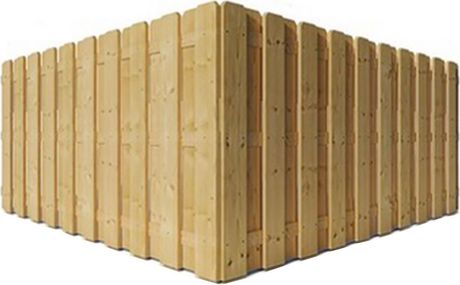
Chain link is the lowest entry point, which is why it still does most of the work on utility and security runs. Wood is next, and it is the material most often compared unfairly, because the cheap version of a wood fence is a much shorter-lived product than the version worth buying.
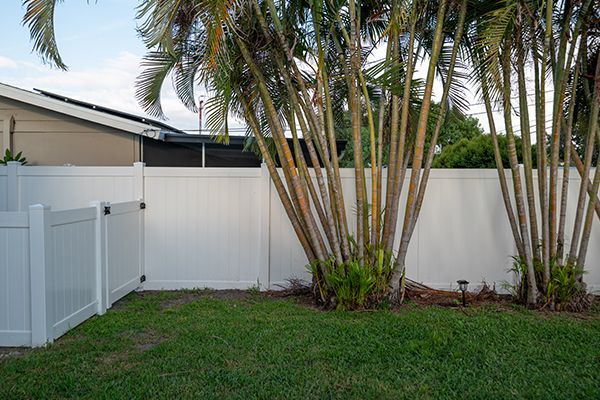
Vinyl sits in the middle and behaves predictably: no finish to renew, panels that can be replaced individually, and a colour that does not need repainting. Aluminum costs more per foot than vinyl and is the right answer where you want an open look, a coastal-grade finish and a gate that swings for twenty years without sagging.
Composite is the highest material cost of the five, and the case for it is longevity and appearance rather than a lower number on the quote.
The site decides more than the catalogue
Pinellas County yards have their own line items. Sandy soil that needs deeper footings. A slope that has to be racked or stepped. Old posts set in concrete that have to come out before new ones go in. A pool deck that has to stay usable while the barrier goes up.
Removal and haul-off is real work and real dump fees, and it is the line most likely to disappear from a cheap quote and reappear as a change order. If a quote does not mention removal, ask where it went.
Where we will not cut
Posts, concrete, fasteners and gate bracing are the parts nobody sees and everybody notices in year five. A fence that fails early almost always failed at the post, not at the panel.
That is why we would rather quote the run you will still have in a decade than win a comparison against a number that leaves out footings, haul-off or hardware.
How to compare two quotes fairly
Put the two documents side by side and check five things: the linear feet and height, the number and width of gates, whether removal is included, the post depth and concrete specification, and what hardware is being supplied.
If one number is dramatically lower, one of those five is usually different. Ask which one. A contractor who can explain the difference is worth more than a line item that looks tidy.
Our estimates are free and written, and we walk the property before quoting, because the site is where the number actually comes from.
- Material, labour and site preparation are the three drivers; style is a decision inside them.
- Gates are priced individually, not as fence sections.
- Removal, footings and hardware are the lines that vanish from cheap quotes.
- Compare quotes on linear feet, gates, removal, post depth and hardware.